
Uninformed Forbes Blogger: “The Minimum Wage: More Baloney”

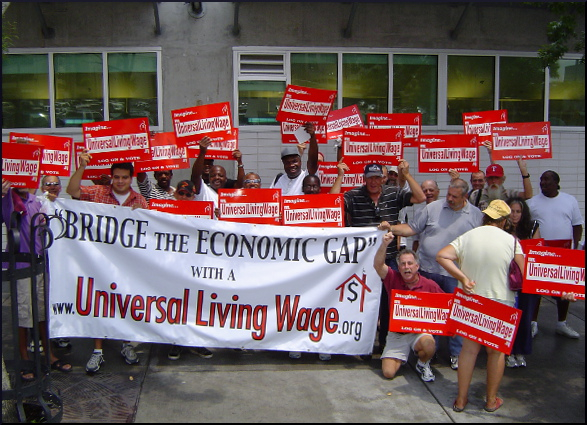
William Dunkelburg, contributor to the Forbes magazine and author of The Minimum Wage: More Baloney, is a special kind of elitist. He is out of step with the times, economists, the Small Business Administration, and the special symbiotic relationship between employers and employees.
He starts off by reflecting upon the small business majority (SBM): “Scientific opinion polls show small business strongly supports raising the minimum wage.” Rather than realizing that countless minimum wage myths been debunked and abandoned as so much “baloney,” he clings to sophomoric perspectives and attacks poll methodologies while ignoring common sense.
For example, on the Small Business Administration website, we found a report by Amy Knaup, “Survival and Longevity in the Business Employment and Dynamics Data Base,” that determined that by the end of the fourth year, 64% of all new business startups fail. The report goes on to announce that by the end of the fifth year, a 90% failure rate occurs.
When examining these failed small business plans, House the Homeless suggests that while adequate attention may be paid to manufacturing, advertisement, transportation, warehousing, etc., when it comes to their minimum-wage workers (restaurant workers, construction laborers, janitors, day care aids, store clerks, bank tellers, fast food workers, theater attendants, farm workers, receptionists, maids, poultry processors, garage attendants, retail salespeople, car washers, manicurists, ambulance drivers, landscape workers, data entry processors, elder care aids, security guards, infant care workers, warehouse, general laborers, etc.), the businesses are setting themselves up to fail by paying less than a stabilizing wage.
They are paying less than a living wage: enough to simply pay for a basic food, clothing, and shelter. That “penny wise and pound foolish” practice destabilizes the business. Many, many small businesses see the pool of unemployed workers as an endless resource for employment. The reality is that the resulting employee turnover attacks the business’ bottom line in terms of retraining costs that are exorbitant. House the Homeless has estimated this to be in the billions of dollars. (See book: Looking Up at the Bottom Line.)
Furthermore, by paying a stabilizing wage (a living wage), we can drastically reduce taxpayer subsidies in the form of excess food stamps, general assistance, temporary assistance to needy families, Earned Income Tax Credit (EITC), Medi-cal, etc., which can also result in billions of dollars in savings to taxpayers. (Again, see book: Looking Up at the Bottom Line: The Struggle for the Living Wage).
Mr. Dunkelburg is correct in that study after study has shown that increased wages to minimum-wage workers have been spent right back into the economy. What he does not realize is that due to businesses paying less than living wages since the 1980s, over 1,000,000 minimum-wage workers now needlessly comprise a portion of 3.5 million people experiencing homelessness in this nation.
Upon passage of the Universal Living Wage, these American workers will instantly be empowered to return to the workforce. Additionally, they all need the same thing: affordable housing. The American housing construction industry, both locally and nationally, will leap at the opportunity to create the affordable housing that this population will again be able to afford.
Mr. Dunkelburg states that: “And geography matters, the minimum wage goes a lot further in Ohio than in New York City.” His core thought is correct but he fails to realize the broader implication and the need to create a stabilized workforce.
The United State Military has adjusted its pay system from Variable Housing Allowance (VHA) to Base Housing Allowance (BAH), recognizing that it costs different amounts to live in different areas of the country, and you must pay accordingly in order to have an economically stable workforce. Similarly, the federal government now pays “Locality Pay” to acknowledge the varying costs and the need to pay living wages, so as to stabilize the workforce across the board.
Mr. Dunkleberg then presents an elaborate (if skewed) observation that there are fewer teenage minimum-wage workers and then makes the assumption that that is due to increases in the minimum wage. The moral standard is to pay a fair wage for a fair day’s work. If the worker successfully completes the unit of work, then it does not matter if they are 17 or 71. It is, however, the prerogative of the employer who is hired, but we don’t discriminate against anyone.
In closing, Mr. Dunkelburg states, “High labor costs ultimately show up in higher prices.” He follows with, “All in all, raising the minimum wage is poor policy.”
An example of the non-inflationary relationship between wages and the cost of goods can be found in the1996 survey report entitled: “Think Again: A Wage and Price Survey of Denver Area Fast Food Restaurants.” The survey focused on four national fast food chains: Arby’s, Burger King, McDonalds, and Taco Bell. The lowest-paid Arby’s employees were found at a franchise charging the second highest price for a meal. Conversely, a Taco Bell, while paying $1.50 per hour above other restaurants for starting wages, had the lowest food prices among the 12 other Taco Bells restaurants surveyed. Overall, the study showed that just because wages rise, there is not, and does not have to be, a corresponding increase in prices.
It would appear that the rise is more of a question of what the market will bear, not what the consumer will tolerate. This is not to say that there will not be economic pressures of an inflationary nature. However, minimum-wage workers deserve to be paid a wage that will afford them a roof over their heads other than a bridge. They are just seeking the bare minimum to afford basic food, clothing, and shelter (such as an efficiency apartment).
Large employers may need to learn to live with a little less profit, and small employers may need to learn to grow at a much more reasonable rate, but by paying a living wage, they will have a stable workforce that may well ensure their business’ survival. At the same time, a generalized increased demand for goods, and a new reasonable profit share, will protect the business’ bottom line from being negatively affected by wage increases that afford their employees a minimal existence.
Source: “The Minimum Wage: More Baloney,” Forbes, 04/29/2013
Heroes on the Homeless Front
Twenty years ago, Dr. Roseanna Means looked around Boston and didn’t much care for what she saw – homeless women on the streets. She started volunteering at homeless health clinics, and in 1998 started her own nonprofit, Women of Means, which now encompasses a team of 16 volunteer doctors who collectively chalk up 10,000 professional visits per year with women experiencing homelessness.
For CBS News, Elaine Quijano learned what inspired such activism. Dr. Means told the reporter:
When I see these women, I see this could be me, it could be you, It could it could be any one of us, because there’s nobody that goes through life without having any problems. My own personal life, I’ve been through cancer, I lost a child, I’ve been through divorce, I have steel knees — I’ve been through lots of personal things in my life.
Last year, the same news agency profiled another Massachusetts medic, Dr. Jessie Gaeta of Quincy. This success story, reported by Seth Doane, merits close attention from other cities. Working in the emergency room at the Boston Medical Center made one thing very clear to Dr. Gaeta — for many homeless patients, it was a “revolving door.” She is quoted here:
It wasn’t until I had just a couple of patients housed that I saw this turnaround in their health. Basically I was seeing that if I could write a prescription for keys to an apartment that that was going to do more to improve the health of the patient sitting in front me than the prescription I can write for anything else.
In 2006, Dr. Gaeta got state funding for the program known as “Home and Healthy For Good,” which espouses the “housing first” principle, i.e., first get the person under a roof and between some walls, then bring on the counseling, substance abuse programs, and other measures (a model embraced by House the Homeless at its inception in 1989, as may be guessed from the name).
Here’s what happened in Massachusetts, and watch out, because this part will knock your socks off:
The program has helped reduce homelessness by 63 percent in Quincy and has also cut medical costs for formerly homeless people by more than two-thirds.
‘It was astonishing that a year into this project, we saw such a decrease in medical costs, that we could basically more than afford to pay for the housing,’ said Gaeta.
The “Housing First” philosophy is based on the concept of meeting people where they are, and the reason it works is because where they are is really the only place at which people can be met, no matter how fervently opponents might wish it were otherwise. We hear it again, from Ken Stevens of Waterville, Maine, who says:
My mission is meeting people at their point of need.
The North East Dream Center is where it happens, we are told by journalist Amy Calder. Volunteers pick up or drop off donations for the food warehouse. “Unemployable” people experiencing homelessness and ex-convicts are set to work making furniture and learning skills. Clothes and counseling are also available. The furniture sales help pay for gas to get more donated food so Stevens and his crew can deliver it to food pantries, soup kitchens, and senior citizens all over the surrounding area.
Now Stevens, with the help of Mid-Maine Chamber of Commerce president Kimberly N. Lindlof and other supporters, is raising money for a larger space where these activities can continue with the addition of more ambitious plans. Calder writes:
A big part of the plan is to launch a manufacturing incubator that would provide administrative support and space for 20 startup businesses, as well as jobs and training for people, including those who are ‘unemployable.’
When asked if he has formal training to run such an enterprise, Stevens answers:
Yes. I got trained by the best — God’s spirit.
Reactions?
Source: “Boston doctor’s kindness helps save homeless,” CBS News, 04/23/13
Source: “Mass. doctor’s prescription for homelessness,” CBS News, 02/23/12
Source: “From homeless and hopeless to vital link in the food pantry chain,” KJOnline.com, 03/24/13
Image by Matt Lemon.

In The New York Times earlier this month, Tara Parker-Pope summarized the data on 


The expression was born in Vietnam, a surreal place so different from accustomed reality that many American military personnel spent their whole tour of duty in a state of disorientation. “The world” was anyplace that wasn’t Vietnam, and they longed to return to it, only to find, once they got back, that the USA was even more impossible to cope with.
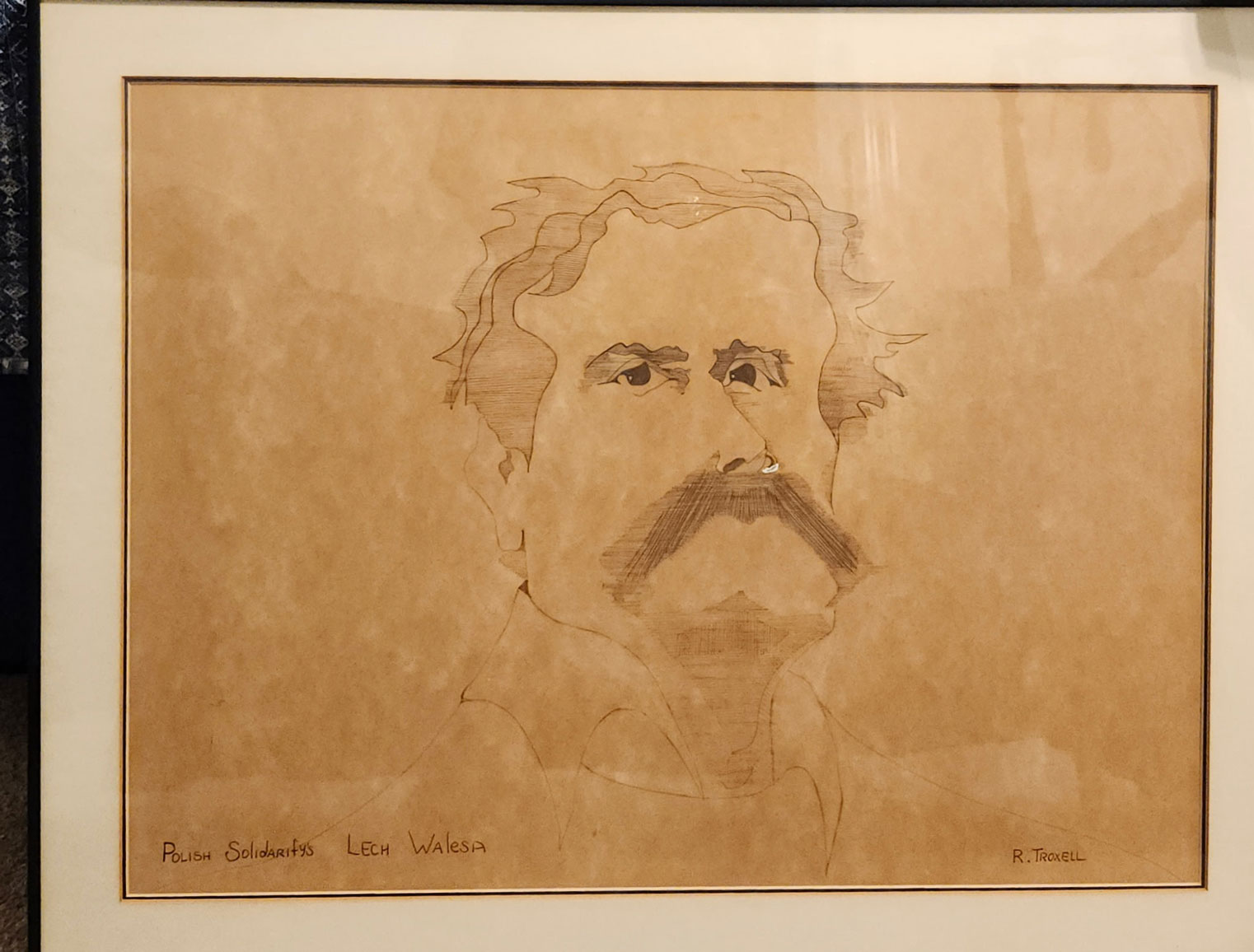
What, you may ask, is depicted here? It’s an artwork called “

Last June, this
To satisfy the federal requirement for the information that is needed to fairly distribute available funding, the people experiencing homelessness are counted every year.
Funding for low-income housing projects is decided in part by the federally mandated annual count of people experiencing